 Back to Blog
 Which Smart Home Protocol Wins in 2026?
Smart home performance is rarely determined by brand recognition or device price. Long-term reliability, responsiveness, and battery longevity are shaped by the underlying communication protocol and the infrastructure supporting it. As device counts increase and multi-vendor ecosystems become standard, protocol selection becomes a structural decision rather than a feature comparison.
In 2026, five technologies dominate the conversation:
● Thread
● Zigbee 3.0
● Z-Wave 800
● Wi-Fi
● Matter 1.4
Each serves a distinct role in modern smart homes, and none performs optimally in isolation. Evaluating them requires examining infrastructure requirements, radio characteristics, interoperability models, and scalability.
Understanding the Smart Home Protocol Landscape
Thread: IP-Native Mesh for Low-Power Devices
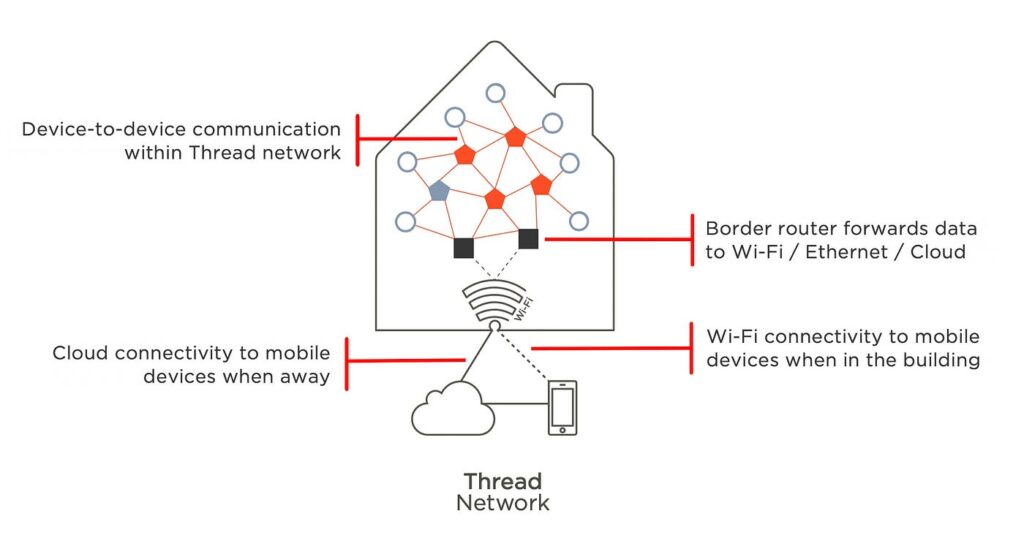
Key characteristics:
- Low-power mesh networking
- IPv6-native architecture
- Sleep-optimized communication
- Border router required
- Self-healing mesh topology
Thread is a low-power mesh protocol designed for sensors, locks, and switches. Unlike Wi-Fi devices that communicate directly with a router, Thread devices relay messages through powered nodes, increasing resilience and coverage without significantly increasing energy use.
Its defining feature is IPv6-native addressing, allowing cleaner integration with modern IP networks. Thread requires a Thread Border Router to bridge the mesh to the primary home network, and many ecosystem devices from Apple Home, Google Home, and Amazon now include this functionality. When implemented as a unified network with adequate routing capacity, Thread delivers excellent latency and battery life. Performance degradation typically results from network fragmentation rather than protocol limitations.
Zigbee 3.0: Mature and Cost-Effective Mesh
Key characteristics:
- 2.4 GHz operation
- Mature mesh ecosystem
- Coordinator-based control
- Cost-effective device scaling
- Wi-Fi interference sensitive
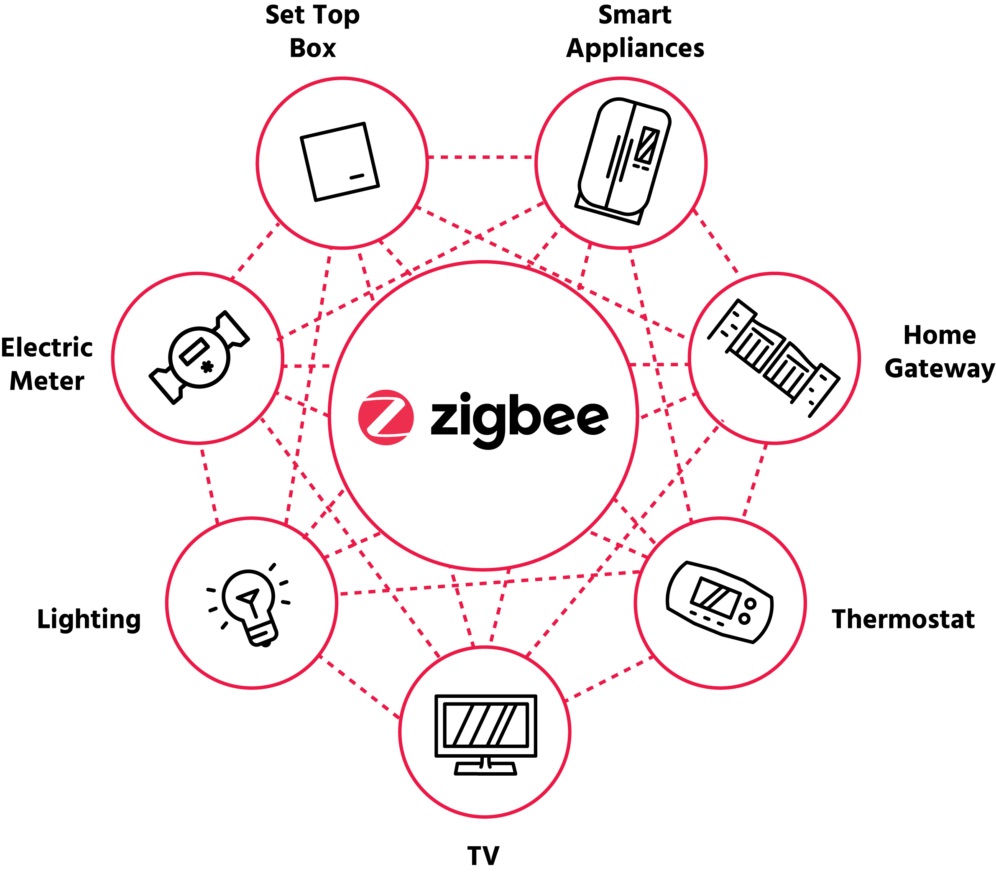
Zigbee 3.0 is the modern unified version of a long-standing mesh standard. Like Thread, it targets low-power devices and extends coverage through powered mesh nodes. Its maturity has produced a broad device ecosystem and highly competitive pricing.
Zigbee is widely used in lighting and sensor ecosystems, including Philips Hue and Aqara. This ecosystem depth makes it attractive for large lighting deployments where cost per node is critical. However, because Zigbee operates in the 2.4 GHz band shared with Wi-Fi and Bluetooth, dense RF environments can introduce interference unless channels are carefully managed. Despite newer standards entering the market, Zigbee remains a practical solution for budget-conscious scaling.
Z-Wave 800: Sub-GHz Reliability and Long Range
Key characteristics:
- Sub-GHz radio operation
- Long Range support
- Strong certification enforcement
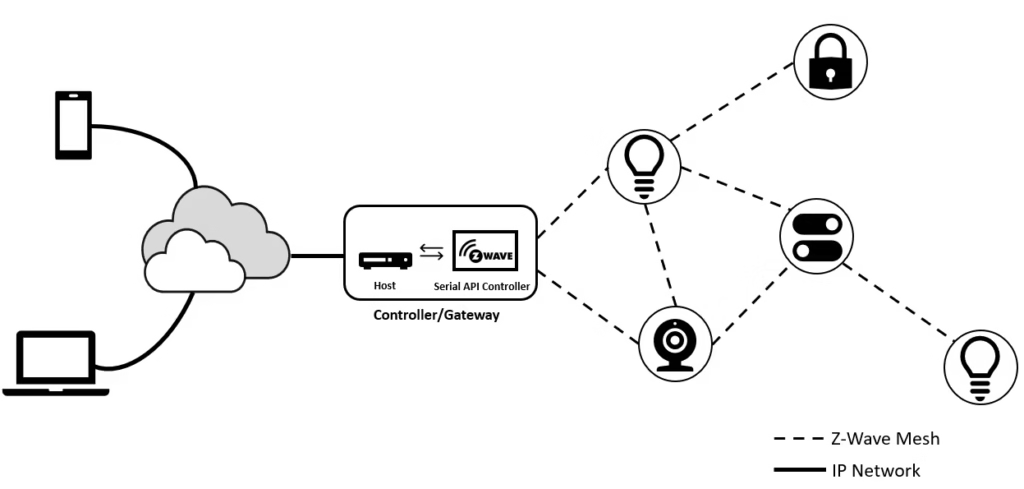
- Controller-based architecture
- High RF reliability
Z-Wave 800 operates on sub-gigahertz frequencies, distinguishing it from Thread and Zigbee. Lower-frequency signals generally penetrate walls more effectively and travel farther, improving reliability in larger homes or properties with detached structures. This also reduces exposure to 2.4 GHz Wi-Fi congestion.
Long Range support extends communication distances under appropriate configurations, and strict certification standards promote consistent interoperability. Platforms such as SmartThings and Home Assistant commonly support Z-Wave in advanced installations. While device costs are often higher than Zigbee equivalents, Z-Wave frequently delivers superior reliability in dense or complex RF environments.
Wi-Fi: High Bandwidth and Ubiquity
Key characteristics:
- High bandwidth transport
- Star network topology
- Direct router connectivity
- Higher power consumption
- Router capacity dependent
Wi-Fi forms the backbone of modern home networking and requires no dedicated smart home hub. It is the default transport for high-bandwidth devices such as cameras, video doorbells, speakers, and televisions, all of which demand sustained throughput.
However, Wi-Fi consumes significantly more power than mesh protocols and is therefore unsuitable for small battery-powered sensors. Scaling dozens of IoT devices can also strain consumer-grade routers, particularly without segmentation or additional access points. Wi-Fi remains essential for media-heavy devices, but is not an efficient solution for all categories.
Matter: Interoperability Rather Than Radio
Key characteristics:
- Application-layer standard
- Transport protocol agnostic
- Multi-admin capability
- Cross-ecosystem interoperability
- Controller-based architecture
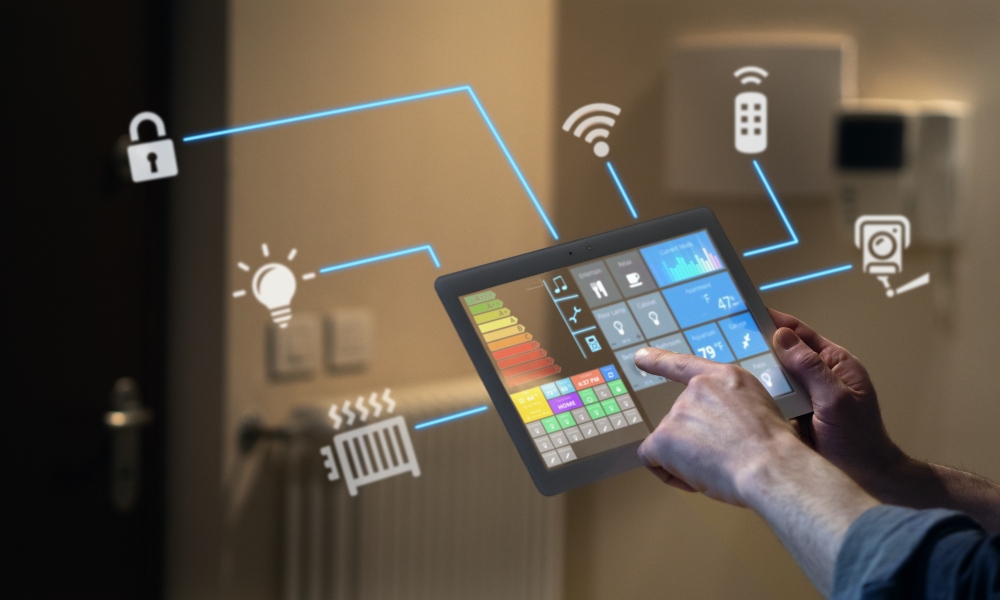
Matter 1.4 is frequently mistaken for a radio protocol, but it is an interoperability standard operating at the application layer. It runs over Thread, Wi-Fi, or Ethernet and defines shared communication rules across ecosystems.
Its primary contribution is cross-platform compatibility. Devices can integrate simultaneously with ecosystems such as Apple Home and Google Home without factory resets, reducing vendor lock-in. Feature exposure, however, may vary; Matter typically guarantees core functions, while advanced capabilities may remain in manufacturer-specific applications. Matter improves interoperability but inherits performance characteristics from the underlying transport.
Infrastructure: The Hidden Determinant of Stability
All protocols require supporting infrastructure beyond a standard router. Thread networks require a Border Router, Zigbee requires a coordinator, Z-Wave requires a controller, and Matter requires an ecosystem controller. Devices such as IKEA DIRIGERA can combine these roles.
Hubs remain critical infrastructure components in scalable installations. Instability often results from overloaded controllers, poor placement, or fragmented networks rather than protocol flaws. Careful planning of radio channels, controller placement, and segmentation determines whether a system feels seamless or unreliable.
Performance and Use-Case Alignment
Protocol performance varies based on radio environment, device density, and workload characteristics. A structured comparison clarifies relative strengths.
| Criterion | Thread | Zigbee 3.0 | Z-Wave 800 | Wi-Fi | Matter |
| Frequency Band | 2.4 GHz | 2.4 GHz | Sub-GHz | 2.4 / 5 / 6 GHz | N/A |
| Network Topology | Mesh | Mesh | Mesh | Star | Runs over transport |
| Power Efficiency | Excellent | Very Good | Very Good | Poor | Transport dependent |
| Wall Penetration | Moderate | Moderate | Strong | Moderate | Transport dependent |
| Interference Risk | Medium | Medium–High | Low | Medium | N/A |
| Latency (Optimized Setup) | Very Low | Low | Low | Low–Medium | Transport dependent |
| Best Device Category | Sensors | Lighting | Switches, Locks | Cameras | Cross-ecosystem devices |
| Infrastructure Required | Border Router | Coordinator | Controller | Router | Controller |
This comparison highlights a key insight: Matter does not compete at the radio layer. It improves interoperability but inherits performance characteristics from the transport protocol beneath it.
With the technical baseline established, performance differences become clearer when examined by deployment scenario.
Sensor-Heavy Installations
Deployments with large numbers of battery-powered sensors benefit most from Thread’s sleep-oriented communication model and IP-native architecture. When supported by a unified Border Router, latency remains low and battery life is strong. Zigbee performs similarly but may experience unpredictability in congested RF environments. Z-Wave also performs well, particularly when signal stability is prioritized.
Dense Apartment Environments
Multi-unit dwellings often experience significant 2.4 GHz congestion due to overlapping Wi-Fi networks. Z-Wave 800’s sub-gigahertz operation avoids much of this interference, improving stability. Thread and Zigbee can perform effectively but require careful Wi-Fi channel planning.
Budget Lighting at Scale
Large lighting deployments prioritize cost per node. Zigbee 3.0 maintains a clear advantage due to ecosystem maturity and competitive pricing. Thread-based lighting is expanding, particularly alongside Matter adoption, but Zigbee remains the most economical option for extensive lighting grids.
Large Homes and Detached Structures
In extended layouts, signal propagation becomes critical. Z-Wave 800’s sub-gigahertz radio and Long Range support provide advantages in larger properties and detached structures. Mesh-based Thread and Zigbee deployments can compensate with additional routing nodes, but this increases infrastructure complexity.
High-Bandwidth Media Devices
Video cameras, doorbells, and streaming speakers require sustained throughput that mesh protocols cannot provide. Wi-Fi remains the appropriate transport for these devices, though scaling may require upgraded networking hardware.
Cross-Ecosystem Flexibility
Matter standardizes device communication across ecosystems, enabling simultaneous integration with platforms such as Apple Home and Google Home. While it reduces vendor lock-in, performance remains dependent on the underlying transport protocol.
Category Leaders in 2026
| Category | Winner |
| Compatibility and ecosystem flexibility | Matter |
| Low-power sensor performance | Thread |
| Reliability in dense or large environments | Z-Wave 800 |
| Budget lighting scale | Zigbee 3.0 |
| High bandwidth media devices | Wi-Fi |
| Long-term interoperability | Matter over Thread or Wi-Fi |
No protocol dominates across all performance dimensions.
The Winning Strategy Is a Layered Stack
The most resilient smart homes in 2026 are built on layered architectures rather than protocol exclusivity. Matter provides interoperability, Thread supports battery-powered sensors, Z-Wave reinforces reliability-critical devices, Zigbee enables affordable lighting expansion, and Wi-Fi handles media-intensive hardware.
Long-term success depends on aligning each device category with the protocol best suited to its operational profile. Infrastructure design and network planning ultimately determine whether a smart home feels seamless or fragile. The protocol that “wins” is the one correctly matched to its role within a well-architected stack.
Similar Articles