 Back to Blog
 IKEA’s Matter Smart Home 3-Month Review on What Works
IKEA’s latest smart home refresh marks a decisive shift toward Matter over Thread, aligning its ecosystem with an emerging industry standard designed to improve interoperability and reduce vendor lock-in. This transition is not merely incremental. It fundamentally changes how devices connect, communicate, and scale within a smart home environment.
After three months of real-world testing across multiple platforms, including dedicated hubs and mainstream ecosystems, a clearer picture emerges. While parts of the lineup remain underwhelming, a small set of devices demonstrates how effective and affordable a well-implemented Matter ecosystem can be.
From Zigbee to Matter over Thread
The Limitations of Zigbee-Based Systems
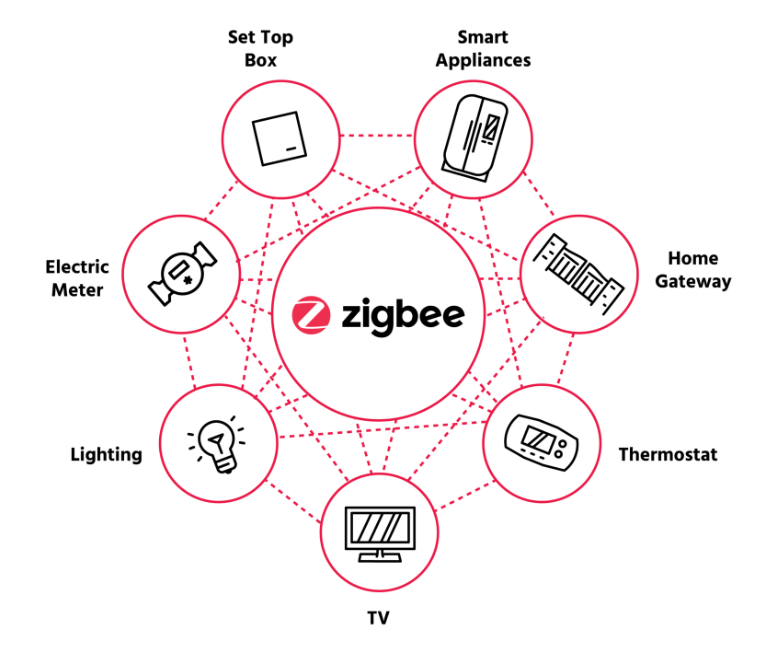
IKEA’s previous smart home lineup relied on Zigbee, a low-power mesh networking protocol introduced in the early 2000s. Zigbee remains technically capable, particularly in terms of energy efficiency and mesh reliability. However, its practical implementation often depends on proprietary hubs and fragmented integrations. This results in ecosystems that are technically functional but operationally constrained, especially when integrating across multiple platforms.
Matter and Thread: A New Foundation
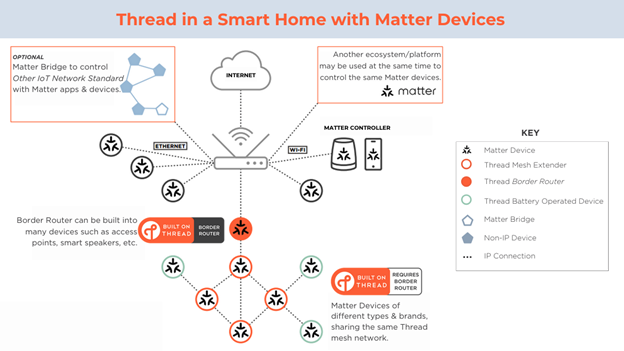
The new lineup is built on Matter, an open connectivity standard backed by major industry players including Apple, Google, Amazon, and Samsung. Matter enables devices to operate across ecosystems without requiring vendor-specific integrations.
Beneath Matter is Thread, a low-power, IP-based mesh networking protocol. Thread devices communicate directly with one another, forming a self-healing network. Every mains-powered device strengthens this mesh by acting as a repeater.
A key architectural component is the Thread Border Router, which connects the Thread network to the wider IP ecosystem. Unlike older models, this role is no longer tied to a single manufacturer. Devices such as smart speakers or hubs can serve as border routers, introducing flexibility and redundancy into the system.
Setup and Firmware Considerations
One practical reality that cannot be overlooked is firmware maturity. Some IKEA devices ship with outdated firmware, which can lead to pairing failures or inconsistent behavior during initial setup.
In most cases, these issues are not hardware defects but software limitations. Updating firmware through a compatible platform, such as a supported smart home ecosystem, typically resolves these problems. If pairing fails on one platform, attempting the setup through another often succeeds, after which firmware updates can be applied.
This highlights an important characteristic of early-stage Matter ecosystems: interoperability is real, but consistency still depends on software maturity.
Platform Differences in Matter Implementations
Although Matter promises cross-platform compatibility, the quality of implementation varies significantly between ecosystems.
Advanced platforms expose richer data and control:
- Some hubs present each sensor metric (e.g., CO₂, PM2.5, humidity) as separate entities.
- Automation capabilities are more flexible and granular.
More consumer-focused platforms tend to simplify:
- Sensor data may be aggregated into a single “air quality” score.
- Automation options are more limited.
This divergence does not indicate a failure of Matter, but rather reflects differences in how platforms interpret and present standardized data. As a result, device capability and user experience are not always equivalent across ecosystems.
Key Device Evaluations
ALPSTUGA Air Quality Sensor
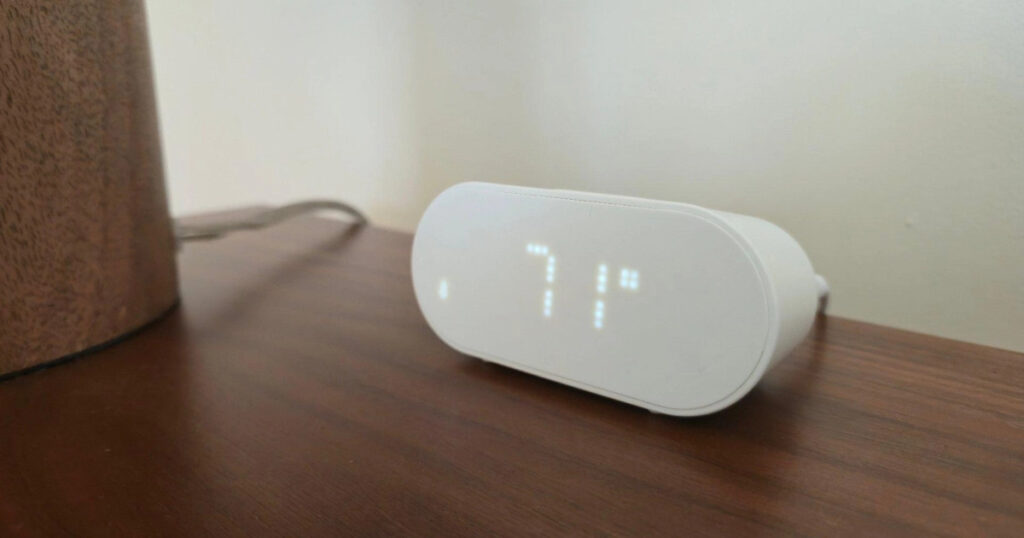
The ALPSTUGA stands out as one of the most technically compelling devices in IKEA’s lineup due to its combination of sensor breadth, affordability, and network contribution.
Capabilities and Design
The device measures:
- Carbon dioxide (CO₂)
- PM2.5 particulate matter
- Temperature
- Humidity
This multi-sensor approach provides a comprehensive indoor environmental profile. A built-in display allows for immediate feedback, reducing reliance on mobile applications.
Because it is mains-powered, the device also functions as a Thread repeater, strengthening network coverage.
Performance and Use Case Limitations
In steady-state conditions, PM2.5 and CO₂ readings are consistent and reliable. However, during rapid environmental changes, such as cooking, the sensor exhibits a noticeable delay in response.
This distinction is important. The ALPSTUGA is well-suited for:
- Long-term air quality monitoring
- Trend analysis
- General environmental awareness
It is less suitable for real-time automation triggers requiring immediate reaction. Understanding this limitation is critical when designing automation workflows.
KAJPLATS Smart Bulbs
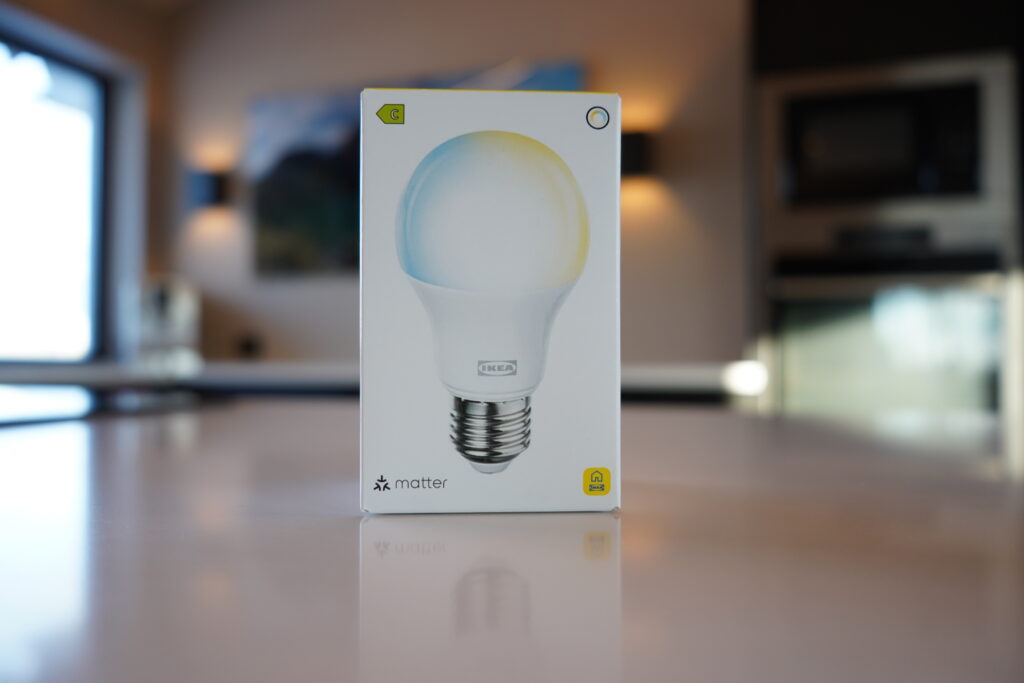
The KAJPLATS bulb lineup demonstrates how lighting can serve both functional and infrastructural roles in a Thread-based system.
Performance and Responsiveness: Command execution is consistently fast, with sub-second response times under normal conditions. This level of responsiveness is essential for maintaining a seamless user experience in both manual and automated scenarios.
Color and Light Quality: White light performance is strong, particularly within the 2700K–4000K range. Color reproduction is slightly less saturated than premium alternatives, especially in deeper hues such as reds and blues. However, in practical use, this difference is subtle and rarely impactful.
Mesh Network Scaling Advantage: A critical but often overlooked benefit is that each installed bulb strengthens the Thread network. As more bulbs are added, network reliability and coverage improve organically.
This creates a positive scaling effect:
- Larger installations become more stable
- Dead zones are reduced
- Latency improves across the network
Cost Efficiency: The cost advantage is significant when deploying multiple bulbs. Compared to premium ecosystems, the total investment required for full-home coverage is substantially lower, without sacrificing meaningful day-to-day performance.
GRILLPLATS Smart Plug
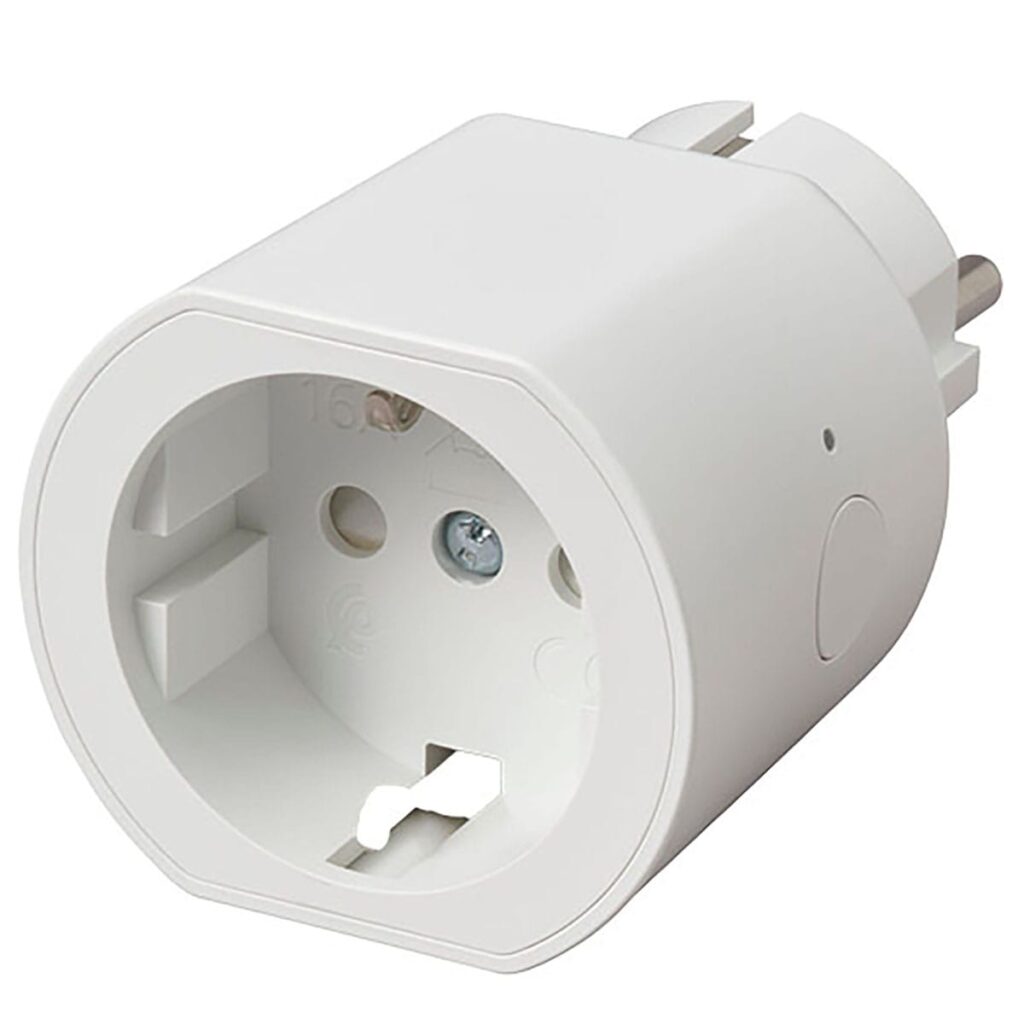
The GRILLPLATS smart plug illustrates how adherence to open standards can unlock meaningful functionality, even in entry-level devices.
Native Energy Monitoring via Matter
The plug exposes detailed energy metrics as native Matter attributes:
- Real-time wattage
- Voltage
- Accumulated energy consumption (kWh)
This is notable because many devices at this price point either omit energy monitoring or restrict access to proprietary applications.
By contrast, GRILLPLATS allows this data to be:
- Accessed across platforms
- Integrated directly into automation systems
- Used without vendor lock-in
Practical Automation Use Cases: Energy monitoring enables straightforward yet powerful automations. For example, detecting when a washing machine cycle completes based on a drop in power consumption can be implemented with minimal setup and no custom code.
Network Contribution: As a mains-powered device, the plug also acts as a Thread repeater. Strategic placement can extend network coverage to areas that may otherwise experience weak connectivity.
Value Proposition: Compared to higher-priced alternatives, GRILLPLATS delivers equivalent data accessibility and reliability at a lower cost. This makes it particularly effective in budget-conscious smart home deployments.
What Happens When a Thread Border Router Fails
A critical architectural consideration in Thread networks is the role of the border router.
If the border router goes offline:
- The Thread mesh itself continues to operate locally
- Devices remain connected to one another
- However, external communication is lost
This means:
- Cloud-based automations stop functioning
- Platform control becomes unavailable
- Devices cannot receive new instructions
This failure mode underscores the importance of redundancy. Deploying multiple border routers ensures that the network remains operational even if one device fails.
Reliability in smart home systems is not solely about device quality. It is heavily influenced by network design.
Devices with Limited Value
Not all devices in IKEA’s lineup offer the same level of utility.
TIMMERFLOTTE Temperature and Humidity Sensor
While functional, this device overlaps significantly with the ALPSTUGA’s capabilities. Its primary advantage is flexible placement due to battery operation. In environments where mains power is available, it is largely redundant.
Motion Sensors and Contact Sensors
Indoor motion sensors from third-party manufacturers often provide:
- Higher sensitivity
- Better configurability
- Comparable pricing
However, IKEA’s outdoor-capable sensors offer strong durability and weather resistance, making them suitable for environments where alternatives may not be rated.
Water Leak Sensors
Basic leak sensors provide alerts but do not take corrective action. More advanced solutions that integrate with automatic shutoff valves offer significantly greater protection and should be considered for critical installations.
Conclusion: A Strong Foundation with Select Standouts
IKEA’s transition to Matter over Thread represents a strategically sound move toward open, interoperable smart home systems. The benefits of this approach, cross-platform compatibility, reduced lock-in, and improved network resilience, are already evident.
However, the lineup is uneven. Only a subset of devices fully demonstrates the potential of the new ecosystem:
- ALPSTUGA delivers comprehensive environmental monitoring at an accessible price, with the caveat of response latency.
- KAJPLATS provides scalable, cost-effective lighting while strengthening the Thread mesh.
- GRILLPLATS offers unusually open and accessible energy monitoring, setting a strong example of proper Matter implementation.
These devices highlight what becomes possible when manufacturers fully embrace open standards. As Matter continues to mature, such implementations are likely to define the direction of the smart home industry.
Similar Articles