
 Back to Blog
 Matter Air Quality Sensors: What to Measure, What to Buy, and What Actually Matters
Smart home setups are often built around control devices such as lighting, plugs, and thermostats. While these devices provide convenience and automation, they lack awareness of real-time environmental conditions. This limitation prevents automations from responding intelligently to what is actually happening in a room.
Air quality sensors address this gap by introducing environmental context into a smart home system. When integrated through Matter, these sensors enable cross-platform communication and local automation without dependency on cloud services. However, the current market for Matter-compatible air quality sensors remains limited and fragmented, with significant variation in capabilities, connectivity, and cost.
This article examines the key measurements these sensors provide, the technologies behind their connectivity, and a detailed comparison of the most relevant devices currently available.
Understanding Air Quality Metrics

Selecting an air quality sensor requires a clear understanding of what each measurement represents and how it impacts indoor environments. The most common metrics include particulate matter (PM2.5), carbon dioxide (CO2), and total volatile organic compounds (TVOC). Each serves a distinct purpose and influences different aspects of health and comfort.
PM2.5: Particulate Matter and Respiratory Health
PM2.5 refers to airborne particles with a diameter of 2.5 micrometers or smaller. These particles originate from sources such as dust, smoke, cooking emissions, and outdoor pollution. Due to their small size, they can penetrate deep into the lungs and are closely associated with respiratory and cardiovascular risks.
In practical terms, PM2.5 measurements are essential for detecting pollution events داخل the home. Activities such as cooking or poor outdoor air quality can significantly elevate these levels. Real-time monitoring allows smart home systems to trigger purifiers or ventilation systems when thresholds are exceeded.
CO2: Ventilation and Cognitive Performance

Carbon dioxide levels are often overlooked in consumer smart home setups, yet they are one of the most important indicators of indoor air quality. Unlike particulate matter, CO2 is not a pollutant but a byproduct of human respiration. In enclosed spaces, especially bedrooms, CO2 levels can rise rapidly without adequate ventilation.
Research indicates that CO2 concentrations above 1000 ppm can negatively impact cognitive function and sleep quality. In typical residential scenarios, such levels can be reached within a few hours in closed rooms with one or more occupants. Monitoring CO2 enables automation of ventilation strategies, such as activating fans or opening dampers, to maintain optimal conditions.
TVOC: Chemical Emissions and Indoor Contaminants
Total volatile organic compounds represent a broad category of gases emitted from materials such as paints, cleaning products, adhesives, and furnishings. Unlike PM2.5 and CO2, TVOC sensors do not identify specific compounds but instead provide an aggregated indication of chemical presence.
Consumer-grade TVOC sensors are best interpreted as trend indicators rather than precise measurement tools. Sudden increases typically signal the introduction of new chemical sources into the environment. While they lack specificity, they remain useful for identifying when ventilation is required or when indoor sources may be affecting air quality.
Matter and Connectivity Considerations
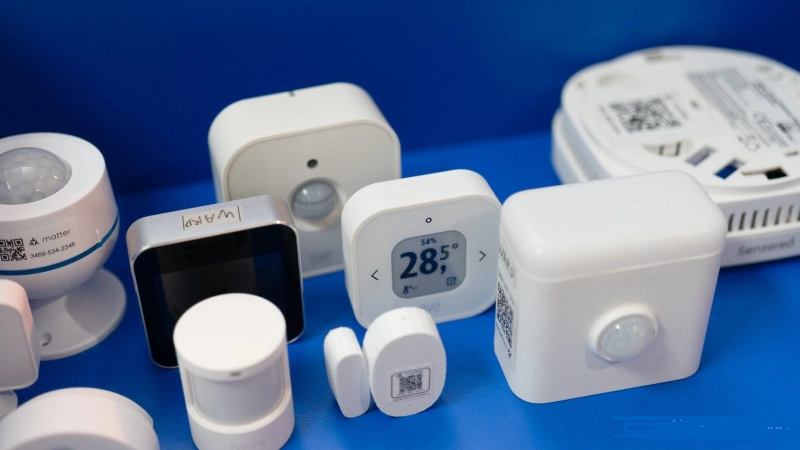
Beyond measurement capabilities, connectivity plays a critical role in determining how effectively a sensor integrates into a smart home ecosystem. Matter serves as the communication standard, while the underlying transport layer, typically Thread or Wi-Fi, affects performance and reliability.
Matter as a Unifying Standard
Matter enables interoperability between devices from different manufacturers by providing a common communication protocol. This allows sensors, actuators, and controllers to interact locally without reliance on proprietary ecosystems or cloud services. As a result, automations can be executed faster and with greater reliability.
Thread vs Wi-Fi
Thread is a low-power mesh networking protocol designed specifically for smart home devices. Each powered Thread device can act as a router, extending network coverage and improving resilience. This distributed architecture reduces single points of failure and enhances reliability in larger deployments.
Wi-Fi, by contrast, is more widely available and easier to set up, as it does not require additional infrastructure. However, it places additional load on the home network and may introduce latency or congestion in environments with many connected devices.
Thread networks require a border router to connect to the main network. Many commonly used devices already provide this functionality, including Apple HomePod mini, Apple TV 4K, Google Nest Hub, Amazon Echo (4th generation), and Samsung SmartThings Station.
Device Comparison: Current Matter Air Quality Sensors
The current selection of Matter-compatible air quality sensors is limited, but several devices stand out for their capabilities and design approaches.
IKEA VINDSTYRKA / Alpstuga
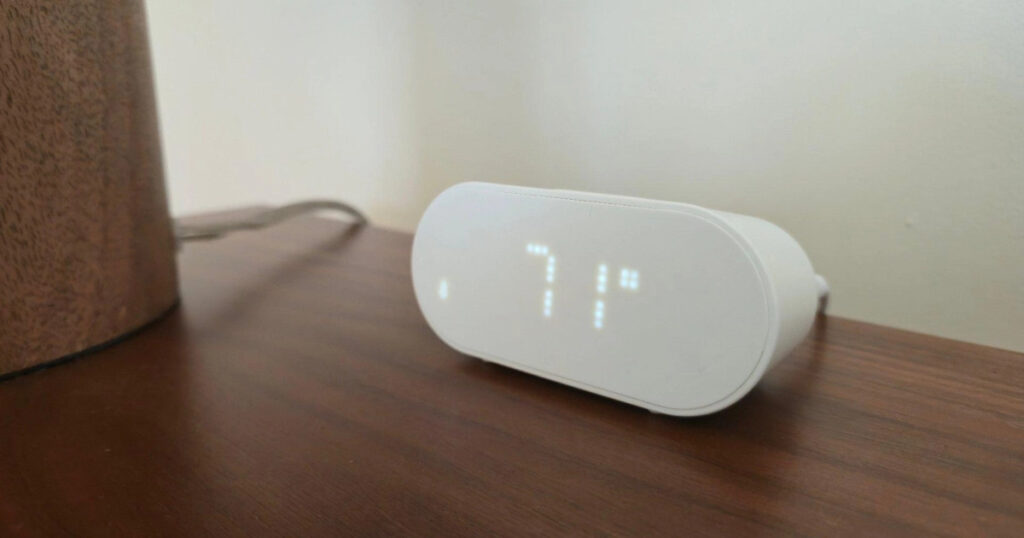
The IKEA Alpstuga represents one of the most cost-effective entries in this category. Priced at approximately $30, it integrates multiple sensing capabilities, including CO2, PM2.5, temperature, and humidity.
It operates using Matter over Thread and does not require a proprietary hub for basic functionality. Because it is continuously powered via USB-C, it also contributes to the Thread mesh network as a router node. The inclusion of a Sensirion sensor module further enhances its credibility, as Sensirion is a well-established manufacturer of environmental sensing components.
However, some limitations should be noted. Initial pairing can be inconsistent, though it is typically resolved with a reset. Additionally, the always-on display may be unsuitable for bedroom environments, and certain platforms may not expose all measured data points.
Sonoff AirGuard Series (07P and 08P)
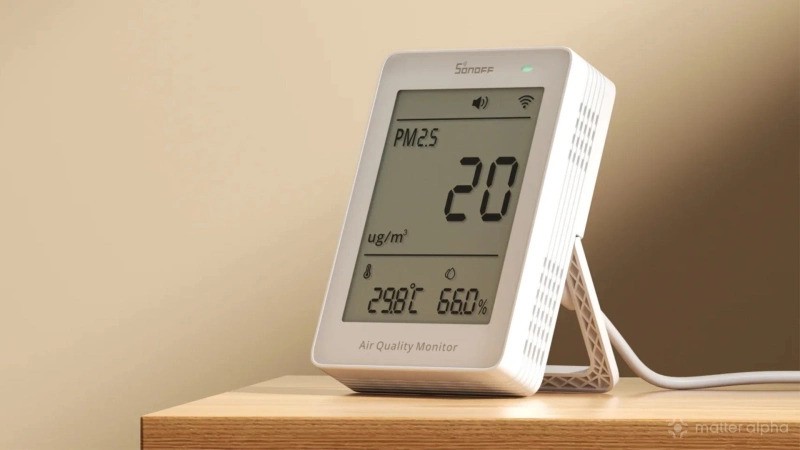
Sonoff takes a modular approach with two separate devices. The AirGuard 07P focuses on particulate matter, measuring PM2.5 and PM10 along with temperature and humidity. It features a rapid refresh rate of approximately two seconds, making it well-suited for responsive automations.
The AirGuard 08P complements this by providing CO2 monitoring with a non-dispersive infrared (NDIR) sensor, which offers higher accuracy than lower-cost alternatives. Both devices connect via Matter over Wi-Fi, simplifying setup and eliminating the need for Thread infrastructure.
The primary drawback of this approach is cost and fragmentation. Achieving full coverage of both particulate and CO2 metrics requires purchasing both devices, resulting in a combined cost significantly higher than that of integrated alternatives.
LG Air Quality Sensor
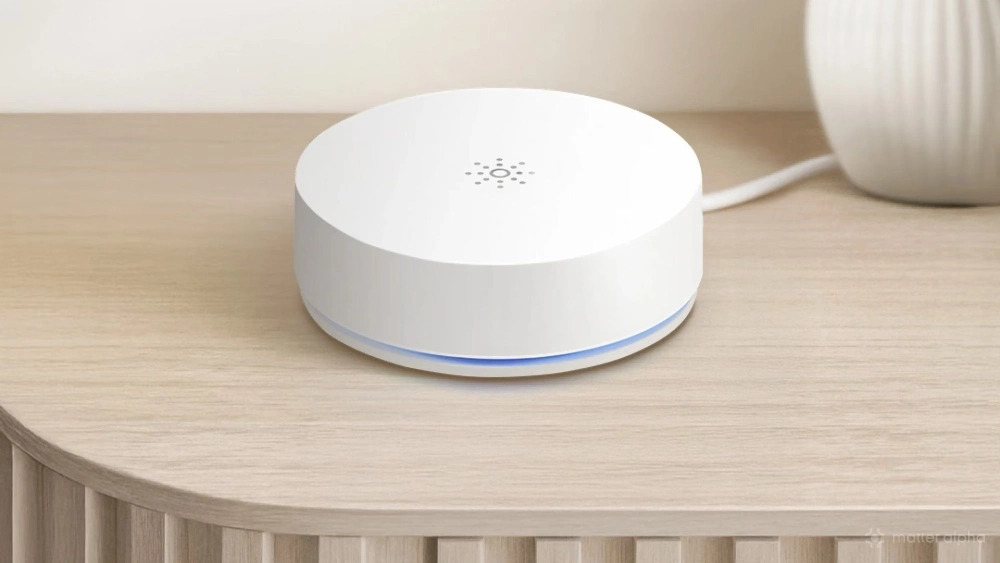
The LG Air Quality Sensor offers the most comprehensive set of measurements currently available in a single Matter-compatible device. It tracks PM1.0, PM2.5, PM10, CO2, temperature, and humidity, providing a more granular view of air quality.
Its use of Thread ensures reliable local connectivity and contributes to network stability. The device employs a color-coded LED ring instead of a traditional display, prioritizing minimal design over detailed on-device data visualization.
Despite its capabilities, availability remains limited in many regions, and long-term performance data is still relatively scarce due to its recent release.
Aqara TVOC Sensor
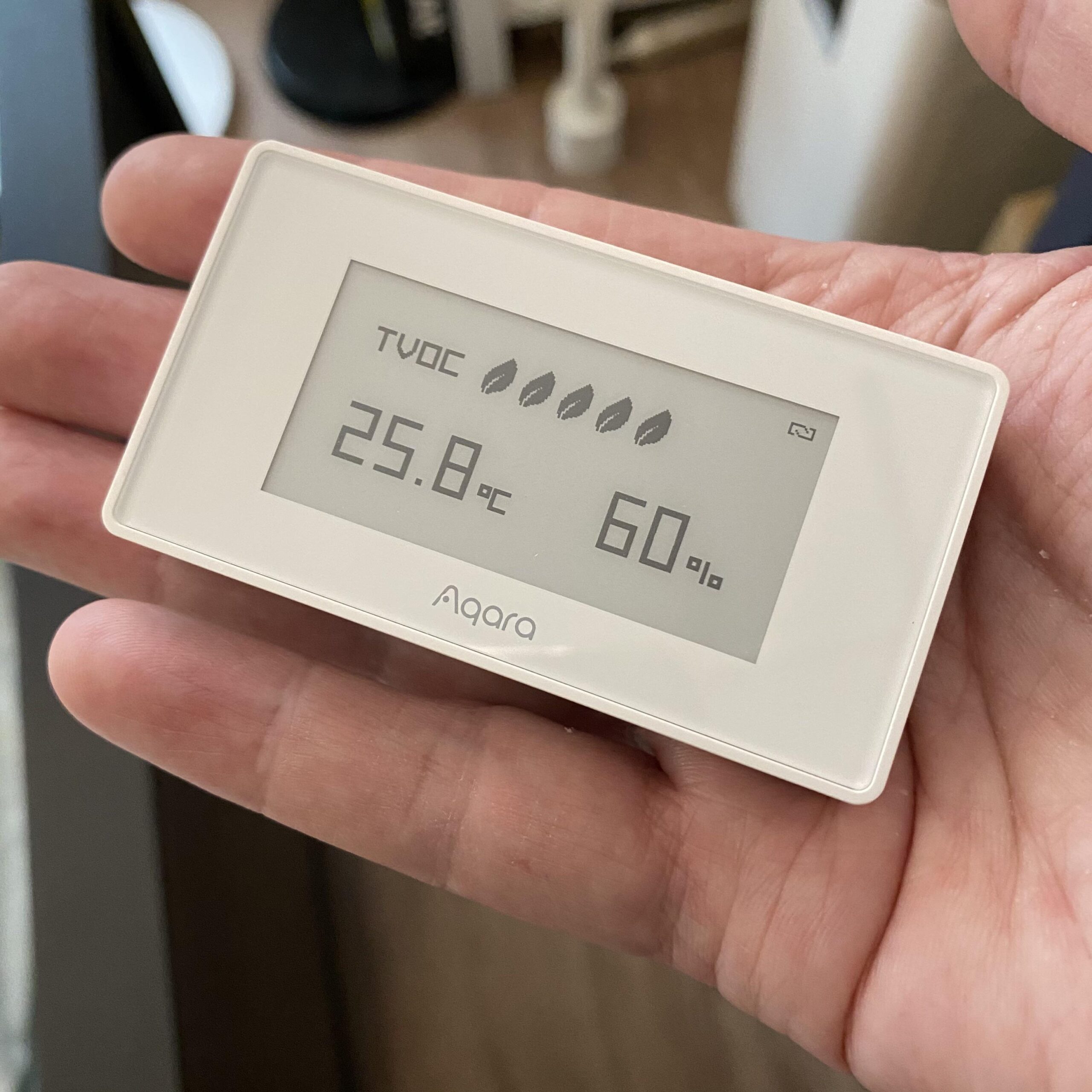
The Aqara TVOC sensor addresses a different use case by focusing exclusively on chemical emissions. It features a battery-powered design, an e-ink display, and flexible mounting options, making it easy to deploy in various locations.
Integration with Matter requires an Aqara Zigbee hub, which introduces additional cost and complexity. While the sensor provides useful trend data for detecting changes in air composition, it should not be relied upon for precise measurement of specific compounds.
Practical Applications in Smart Home Automation
Air quality sensors become most valuable when integrated into automation workflows. By linking sensor data with actuators such as air purifiers, fans, and ventilation systems, it is possible to create responsive environments that maintain optimal conditions automatically.
For example, PM2.5 thresholds can be used to control air purifiers, activating them when pollution levels rise and deactivating them once air quality improves. Similarly, elevated CO2 levels can trigger ventilation strategies to improve airflow and maintain cognitive performance and sleep quality.
Because Matter enables local communication between devices, these automations can operate without relying on the cloud, resulting in faster response times and improved reliability.
Choosing the Right Sensor
Selecting the appropriate sensor depends on the specific requirements of the environment and the existing smart home infrastructure.
For most use cases, a balanced device that combines CO2 and particulate monitoring offers the best value. Thread-based devices are preferable for long-term scalability and network stability, particularly in larger or more complex setups.
Wi-Fi-based sensors remain a practical option for simpler deployments or where Thread infrastructure is not available. In scenarios where chemical emissions are a primary concern, a dedicated TVOC sensor can complement other devices.
Conclusion
Air quality sensors fundamentally change how a smart home operates by introducing real-time environmental awareness. Rather than relying solely on schedules or manual input, systems can respond dynamically to actual conditions within the home.
Although the current selection of Matter-compatible sensors is still evolving, there are already viable options that balance cost, performance, and integration. As the Matter ecosystem continues to mature, these devices are likely to become a standard component of modern smart home design.
A well-chosen air quality sensor does not simply add another data point. It becomes the foundation for more intelligent, responsive automation.
Links:
Sonoff AirGuard 07P: https://sonoff.tech/products/sonoff-airguard-pm2-5-pm10-matter-over-wi-fi-air-quality-monitor-sawf-07p?ref=499&utm_source=affiliate (10% discount with the code “ASmarterHouse”)
Sonoff AirGuard 08P: https://sonoff.tech/products/sonoff-airguard-co2-matter-over-wi-fi-air-quality-monitor-sawf-08p?ref=499&utm_source=affiliate (10% discount with the code “ASmarterHouse”)
Similar Articles